
Christina Schaump - Halifax, NS
My name is Christina Schaump, a registered Social Worker whose life was profoundly impacted by a delayed diagnosis of a cerebrospinal fluid leak (CSF Leak) within the Nova Scotia Healthcare System.

In 2013, I sustained a head injury when a garage door struck my head. I developed severe disabling symptoms. For years, I was repeatedly diagnosed with post- concussion syndrome and migraines, despite the worsening daily postural headaches and neurological symptoms.
In 2016 a neurologist outside my province raised the possibility of a CSF Leak and recommended further imaging and an epidural blood patch. Despite this, my care in Nova Scotia continued to focus on concussion- related diagnoses. Multiple MRI’s showed indirect findings, including Tarlov cysts and low- lying cerebellar tonsils, but no clear treatment plan was established. I underwent three spinal taps, each of which significantly worsened my same symptoms.
In 2019, after exhausting Provincial resources, and central Canada resources, I sought evaluation and treatment at a specialized CSF Leak Program in the United States. There, I received an epidural blood patch, which resulted in undeniable improvement in my disabling symptoms- somewhat confirming the suspected diagnosis. My provincial medical insurance was consulted for 3 months prior to attending and they denied coverage.
This epidural blood patch failed in 2020, and Covid had an impact on treatments out of province, and by the end of 2020 the Nova Scotia healthcare involved began to adopt the post-concussive syndrome and migraines again, despite the obvious. In 2021 a new healthcare professional evaluated and determined I needed another epidural blood patch. This anesthesiologist began to advocate on my behalf, and when requests for appropriate treatment inside Atlantic Canada failed, attempts to get approval of out of province and country assistance through provincial medical insurance was repeatedly denied, despite her and this US expert opinion. With no other options, I returned to the United States in 2024, paying out of pocket for a second epidural blood patch, again experiencing significant – though temporary relief (two months).
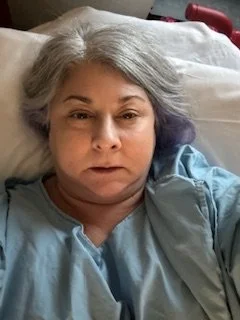
In 2024 another healthcare professional wrote Nova Scotia medical insurance, and they began to approve funding. I went out of province for a CT Myleogram and epidural blood patch and the findings included a probable spinal CSF Venous Fistulas at T9 and T7. The epidural blood patch done in Canada was targeted at my T level spine and lasted just over two months. The 6th Neurologist wrote Nova Scotia medical insurance and funding was provided for me to attend the Mayo Clinic for a PCCT scan, and another epidural blood patch. While the treatments consisting of epidural blood patches, have provided short-term improvement, a definitive diagnosis and long-term solution remain challenging, a common theme with many leakers.

This 12- year journey highlights serious concerns about delayed diagnosis, access to specialized care, and barriers to out-of-province and out-of-country treatment for complex conditions. Patients with CSF Leaks often endure debilitating symptoms and are at risk of misdiagnosis and delay of treatments. This is an urgent Neurological condition. No one should be forced to choose between their health and financial stability.
Complex cases need complex reviews and decisions on these cases cannot be done in silos.
I am thankful for the two healthcare professionals I have in Nova Scotia who have advocated for my healthcare needs. I commend Elizabeth Smith McCrossin, MLA for her advocacy, and that she challenged those in positions to guide decision making. I ask that those in positions of power advocate for their patients – we matter!
In this video, Elizabeth Smith-McCrossin raises awareness about spinal CSF leak in the Nova Scotia House of Assembly while sharing the experience of Nova Scotia patient Christina Schaump and highlighting the importance of timely diagnosis and access to specialized care. (Shared with permission.)